Comparisons
Screenshot API Alternatives: An Honest Comparison (2026)
August 11, 2026 · 5 min read · Grabbit Team
If you are comparing screenshot API alternatives, you have almost certainly hit one of three walls: a monthly quota that resets before you use it, a feature the tool does not have, or an integration path that does not fit how you actually build. This is an honest, side-by-side comparison of the main options, with a clear note on where each one wins.
The short answer
Every screenshot API does the same core job: send a URL, get back a rendered image. They differ on three things that actually matter, so pick by whichever is your bottleneck:
- Billing model. Monthly plans reset unused capacity; a flat annual plan does not. This is the biggest hidden cost for spiky or seasonal workloads.
- Billing unit. Screenshot counts, browser units, and option-weighted credits are different products. Normalize the work before comparing the rate.
- Integration. A raw REST endpoint, a first-party SDK for your language, or an agent-callable MCP tool are three different developer experiences.
Grabbit is the alternative when monthly waste and agent onboarding are your pain: $0.002 per capture, with 25,000 included credits per year that expire at term end rather than monthly, plus a built-in MCP server. If you cancel, you keep the included balance until term end; separately purchased top-up credits do not expire while your account remains active. Higher-volume ApiFlash plans publish a lower included rate, so compare the exact commitment and billing unit in the sourced hub.
How the alternatives compare
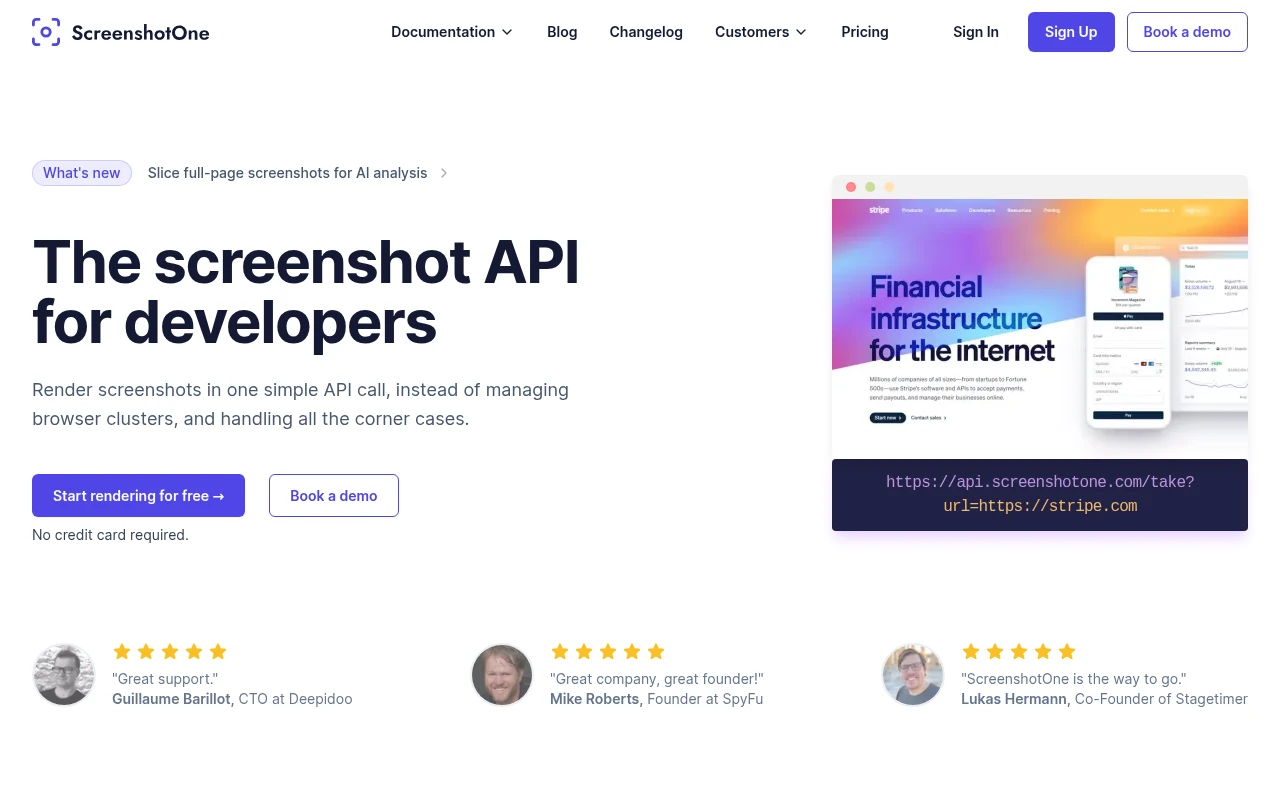
Use the canonical screenshot API comparison hub for current plan math and first-party evidence. The hub covers Grabbit, Urlbox, ScreenshotOne, and ApiFlash, then separates REST API, SDKs or examples, CLI, hosted MCP, local MCP or skills, authentication, and result handling. It was verified September 29, 2026.
Match the alternative to the pain
If monthly resets are wasting money
On a monthly reset plan, a team that captures 1,500 pages in January and 9,000 in March pays the full monthly allowance both months, and January's unused capacity evaporates. You pad the plan to cover the busy month and forfeit the difference every quiet one. Grabbit's annual credits remove that monthly pressure: the balance lasts through the subscription year, then expires at term end. If you cancel, you keep it until then. Separately purchased top-up credits do not expire while your account remains active. For variable workloads (OG images on publish, monitoring runs, batch research), the billing model often matters more than the headline rate. See why monthly screenshot quotas waste money for the full math.
If you need a first-party SDK
ScreenshotOne maintains client libraries for Ruby, PHP, Go, Java, C#, and more. If you want a supported SDK in your language rather than a raw HTTP call, that is a genuine advantage and a good reason to stay with it. Grabbit is a plain REST endpoint plus an MCP server, not a per-language SDK set.
If an AI agent needs to see the page
Grabbit and ScreenshotOne both publish hosted MCP servers. Urlbox publishes an official CLI and installable agent skill. ApiFlash remains a direct HTTP API in the first-party documentation reviewed September 29, 2026. If agent onboarding is why you are shopping, compare the actual client surface instead of treating every product as REST-only.
If you just want the lowest possible rate
Start with the dated comparison packet, then normalize screenshots, render units, option-weighted credits, and commitment length. ApiFlash Large publishes a lower included screenshot rate than Grabbit, while Browserless publishes a lower unit rate that is not guaranteed to equal one screenshot.
Try an alternative before you pay
You can wire up Grabbit and run a response-handling check in CI before adding a card. A synchronous request with a test key (sk_test_...) returns a placeholder image at no charge; switch to a live key (sk_live_...) with available credits for real captures. Here is a request against Grabbit's API:
curl https://api.grabbit.live/v1/grabs \
  -H "Authorization: Bearer sk_live_..." \
  -H "Content-Type: application/json" \
  -d '{
    "url": "https://example.com",
    "width": 1280,
    "height": 720,
    "format": "webp",
    "full_page": true
  }'
The response includes image_url (the hosted screenshot), bytes, execution_ms, and id. Set full_page: false with a fixed height (240 to 1080) for a viewport shot, add delay_ms (up to 10000) to wait for JavaScript-heavy content, or selector to clip to a single element. Point a synchronous request at an sk_test_ key first to verify the migration wiring with a free placeholder, then use a live key for the actual page.
How to choose
- Monthly reset waste, variable volume: Grabbit (flat annual, no monthly reset).
- Full browser control, willing to script: Browserless.
- Lowest named included screenshot rate among the current deep comparisons: ApiFlash Large.
- First-party SDKs for a non-JS backend: ScreenshotOne.
- An AI agent needs to call it: Grabbit or ScreenshotOne (both ship MCP).
If your comparison is really "managed cloud browser vs. a screenshot endpoint," see the Browserbase alternative breakdown. For current provider facts, use the sourced comparison hub. For Grabbit's pricing, parameters, and agent onboarding, see screenshots as a service.
FAQ
- Which screenshot API is the best?
- There is no single best one, only the best fit for how you bill and integrate. If your volume is spiky and monthly resets waste capacity, a flat annual plan like Grabbit ($0.002 per capture, 25,000 credits that reset at annual renewal rather than monthly) can fit better. Separately purchased Grabbit top-up credits do not expire while your account remains active. If you need full browser control, Browserless uses unit-based billing and supports Puppeteer or Playwright. If you need first-party SDKs for Ruby, PHP, Go, or Java, ScreenshotOne is hard to beat. Pick by workload, not by a leaderboard.
- What is a screenshot API?
- A screenshot API captures an image of any web page through a single HTTP request. You send a URL and parameters (viewport size, format, full-page, a wait delay), and the service renders the page in a real Chromium browser on its own infrastructure and returns a hosted image. It replaces running and maintaining your own headless browser fleet.
- Is there a free screenshot API alternative?
- Several providers have a free tier or trial credits, including Screenshotlayer and ScreenshotOne. A synchronous Grabbit request with a test key (sk_test_...) returns a placeholder image at no charge, so you can verify the integration wiring in CI before adding a card. It does not capture the target page. Free tiers are good for prototyping; check the per-grab rate and monthly reset policy before you rely on one in production.
- Can you automate screenshots?
- Yes. A screenshot API is built for automation: call it from a cron job, a CI step, a webhook, or an AI agent to capture pages on a schedule or on demand. Grabbit ships an MCP server so an agent can register capture as a callable tool, and an async mode for batching many URLs. You never run a browser yourself.
- Why look for a screenshot API alternative?
- The three most common reasons are billing, features, and integration. Billing: a monthly quota that resets before you use it, forcing you to pad your plan for the busy month and forfeit the rest. Features: a provider that lacks full-page capture, selector targeting, or wait controls. Integration: a raw REST endpoint when you need a first-party SDK or an agent-callable tool. Match the alternative to whichever of those is actually costing you.
Capture any website with one API call
Get a free test key and wire your first request in two minutes.
Written by
Grabbit Team
Screenshots as a service
The team behind Grabbit, the screenshot API for developers and AI agents. We write about web capture, rendering, and automating screenshots at scale.
Keep reading
Why Monthly Screenshot Quotas Waste Your Money (Screenshot API Pricing, Explained)
Screenshot API pricing is almost always a monthly quota that resets. Here is how that quota quietly wastes money on spiky workloads, and how to read a pricing page so you pay for captures instead of empty allowance.
Aug 9, 2026 · 8 min read
Browserbase Alternative: When You Need a Screenshot, Not a Whole Cloud Browser
Looking for a Browserbase alternative? If the job is capturing a rendered page, not driving a full cloud browser session, a screenshot API is simpler and cheaper. An honest comparison, plus when to stay on Browserbase.
Aug 10, 2026 · 7 min read
The Best Screenshot APIs in 2026 (An Honest Comparison)
Comparing the top screenshot APIs on billing model, per-grab cost, features, and agent support so you can pick the right one for your project.
Jun 11, 2026 · 5 min read