Dev frameworks
Selenium vs Playwright: Which Should You Use in 2026?
August 7, 2026 · 7 min read · Grabbit Team
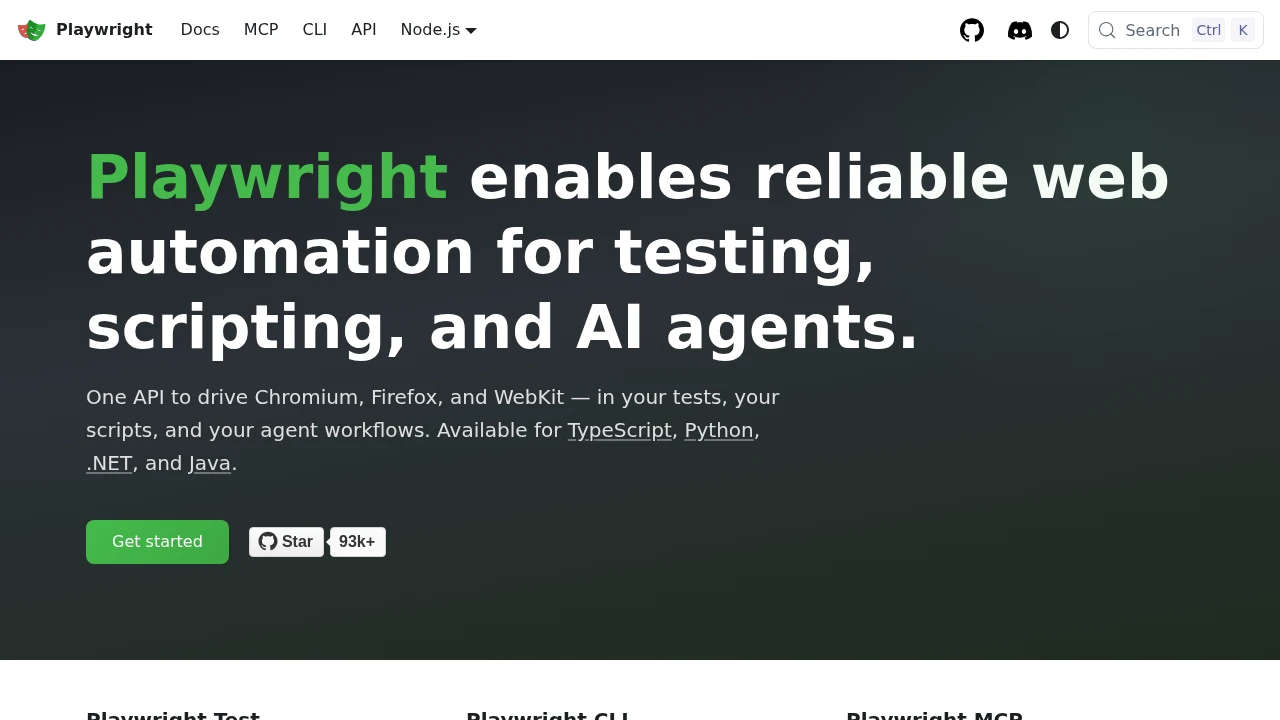
Playwright and Selenium are the two tools most teams weigh when they automate a browser, and in 2026 the momentum is clearly with Playwright: it just passed Selenium in adoption surveys for the first time. But "which is winning" and "which should you use" are different questions. The right answer depends on your language, your existing suite, and whether you are automating tests or just need an image back from a URL. Here is the honest comparison.
The short answer
- New project, JavaScript or TypeScript or Python: Playwright. Auto-waiting, a smaller API, and three bundled browser engines make it the faster path to reliable automation.
- Existing enterprise Selenium suite, or a non-JS ecosystem (Java, C#, Ruby): Selenium is still a reasonable default. The WebDriver standard, the language breadth, and the grid ecosystem are hard to walk away from.
- You need cross-browser tests with the least flakiness: Playwright. One API drives Chromium, Firefox, and WebKit, and auto-waiting removes most timing bugs.
- You just need a screenshot of a URL, not a test framework: neither. A hosted screenshot API returns a hosted image from one request, with no browser to run.
The rest of this post shows where the two actually differ so you can decide with the details.
Architecture: WebDriver vs direct control
The core difference is how each tool talks to the browser.
Selenium drives browsers through the W3C WebDriver protocol. Your script sends commands to a driver (chromedriver, geckodriver), which relays them to the browser over HTTP. That standardization is Selenium's superpower and its tax: it works with almost any browser and language, but every command is a separate round trip.
Playwright talks to the browser over a single persistent connection using the browser's own debugging protocol. Fewer round trips, and it can observe the page state directly, which is what makes auto-waiting possible.
This one design choice explains most of the practical differences below: speed, waiting, and reliability all trace back to it.
Language and browser support
This is where Selenium still leads.
| Selenium | Playwright | |
|---|---|---|
| Languages | Java, Python, C#, Ruby, JavaScript, and more | JavaScript/TypeScript, Python, Java, C# |
| Browsers | Chrome, Firefox, Edge, Safari (real installs) + huge grid/cloud ecosystem | Bundled Chromium, Firefox, WebKit |
| Standard | W3C WebDriver | Browser debug protocol (not a standard) |
If your team is on Ruby, or you must drive a specific real browser build on a specific OS through a cloud grid, Selenium's breadth wins. If you want three engines that cover the matrix most apps care about, with zero driver management, Playwright's bundled browsers are simpler.
Note that "WebKit" in Playwright is the engine behind Safari, not Safari itself, so it is a very close approximation rather than a byte-for-byte Safari render.
Auto-waiting: Playwright's biggest day-to-day win
Flaky tests are almost always timing bugs. An element is not clickable yet, or the network has not settled, and a fixed sleep either wastes time or fails intermittently.
Selenium makes you manage this. The recommended pattern is an explicit wait:
const { Builder, By, until } = require('selenium-webdriver');

const driver = await new Builder().forBrowser('chrome').build();
await driver.get('https://example.com/login');
await driver.wait(until.elementLocated(By.css('#submit')), 5000);
await driver.findElement(By.css('#submit')).click();
await driver.quit();
Playwright waits for you. Its locators auto-wait for the element to be attached, visible, and actionable before acting, so the same flow needs no explicit wait:
const { chromium } = require('playwright');

const browser = await chromium.launch();
const page = await browser.newPage();
await page.goto('https://example.com/login');
await page.locator('#submit').click();
await browser.close();
Across a full suite, deleting hundreds of wait and sleep calls is the single biggest reliability and maintenance improvement teams report after migrating.
Speed
Playwright is generally faster, and the architecture explains why. Selenium's per-command HTTP round trips add up over a long test, and explicit waits are often padded to be safe. Playwright's single connection and auto-waiting mean it acts as soon as the page is ready, not after a fixed delay.
The gap is real on multi-step flows. On a single screenshot it is mostly noise, because page load time dominates and both tools spend that time the same way.
Locators: role and text over XPath
Selenium's world is CSS and XPath selectors tied to the DOM structure. That works, but a renamed class or an extra wrapper div breaks the locator.
Playwright still supports CSS and XPath, but pushes you toward user-facing locators that read the accessibility tree:
// Playwright: resilient, user-facing locators
await page.getByRole('button', { name: 'Submit' }).click();
await page.getByLabel('Email').fill('user@example.com');
await page.getByText('Welcome back').waitFor();
These survive DOM refactors because they find the button labelled "Submit" rather than its position in the markup. It is a small API difference with a big effect on how often tests break when the frontend changes.
Migrating from Selenium to Playwright
Migration is worth it when flaky tests and explicit-wait upkeep are costing you real time, and your app is JavaScript-heavy. The wait-code deletion alone often pays for the move.
It is not worth it when your Selenium suite is stable, your team lives in a language Playwright serves poorly, or your grid, reporting, and CI are deeply wired into WebDriver. A working suite is an asset; do not rewrite it for fashion.
If you do migrate, do it incrementally: run new tests in Playwright while the Selenium suite keeps guarding old ground, and port flaky tests first, because those are exactly the ones auto-waiting fixes.
Screenshots: where both tools are overkill
Both frameworks take screenshots, and the code is nearly identical. In Selenium:
const image = await driver.takeScreenshot();
require('fs').writeFileSync('page.png', image, 'base64');
In Playwright:
await page.screenshot({ path: 'page.png', fullPage: true });
But if a screenshot is the only thing you need, either tool is a lot of moving parts. You are installing a driver or a bundled browser, running headless Chromium in your own infrastructure, and owning the parts nobody enjoys:
- Provisioning. Headless browsers need a long list of system libraries. Slim containers and serverless functions hit missing-dependency errors before the first pixel.
- Memory and zombie processes. A browser not closed on every error path leaks memory and orphans processes until the box falls over.
- Patching. Browser engines ship security updates constantly, so a long-lived capture service becomes a browser fleet you keep current.
- Concurrency. One browser does one job at a time well. Thousands of captures a day means a pool, a queue, and back-pressure to build and operate.
None of that is test code, and it is the same whether you picked Selenium or Playwright.
The same capture as one API call
When screenshots are a feature you ship rather than a step inside a test, a hosted screenshot API skips the browser entirely. Here is a full-page capture as a single request to Grabbit:
curl https://api.grabbit.live/v1/grabs \
  -H "Authorization: Bearer sk_live_..." \
  -H "Content-Type: application/json" \
  -d '{
    "url": "https://example.com",
    "width": 1280,
    "full_page": true,
    "format": "webp"
  }'
The response includes a hosted image_url you can use directly:
{
  "id": "grb_01jx...",
  "status": "done",
  "image_url": "https://cdn.grabbit.live/grabs/grb_01jx....webp",
  "width": 1280,
  "format": "webp",
  "bytes": 48210,
  "execution_ms": 1180
}
The options you reach for in either framework map onto request parameters: fullPage becomes full_page, a locator or selector becomes the selector field, and a manual wait becomes delay_ms (0 to 10000). Width accepts 320 to 1920, height 240 to 1080, and format is png, jpeg, or webp. Pricing is a flat $0.002 per capture on prepaid credits that never reset, so a screenshot you run once a week costs the same per image as one you run a thousand times a day.
Which to choose
- Greenfield project, want the least flakiness: Playwright.
- Existing enterprise suite, or a non-JS stack, or a specific real-browser grid: Selenium.
- Learning automation from scratch in 2026: start with Playwright, add Selenium for enterprise roles.
- You just need an image from a URL, not a test framework: skip the browser and call an API.
For the framework-specific deep dives, see taking screenshots in Playwright and taking screenshots in Selenium. If you are weighing hosted options, the honest comparison of screenshot APIs covers the trade-offs without the marketing, and Puppeteer vs Playwright compares the two Chromium-first libraries head to head.
FAQ
- Is Playwright replacing Selenium?
- Playwright is taking share fast, especially on new projects, but it is not replacing Selenium outright. Selenium is a W3C WebDriver standard with two decades of tooling, the widest language support, and deep grid and cloud-provider integration, so large enterprise suites keep running on it. The honest read for 2026 is: pick Playwright for greenfield work, keep Selenium where a mature framework or a non-JS ecosystem already exists.
- Is it better to learn Playwright or Selenium in 2026?
- For a new automation engineer starting today, Playwright is the better first tool: auto-waiting removes most flakiness, the API is smaller, and one library drives Chromium, Firefox, and WebKit. Learn Selenium second if you are targeting enterprise or QA roles, where existing Selenium suites are still common and WebDriver fluency is expected in interviews.
- Is it worth migrating from Selenium to Playwright?
- It is worth it when flaky tests and explicit-wait maintenance are costing you real time, and when your app is JavaScript-heavy. Playwright's auto-waiting typically deletes most of the wait/sleep code that makes Selenium suites brittle. It is not worth a rewrite when your Selenium suite is stable, you rely on a language Playwright does not support well, or your grid and reporting are deeply wired into WebDriver.
- Which is faster, Selenium or Playwright?
- Playwright is generally faster. It talks to the browser over a single persistent connection instead of Selenium's per-command WebDriver HTTP round trips, and its auto-waiting avoids padded fixed sleeps. On a real login-and-navigate flow that gap is visible. For a single screenshot, page load time dominates and the framework choice barely matters.
- Can I use XPath in Playwright?
- Yes. Playwright supports XPath and CSS selectors, but its recommended locators are role and text based (get_by_role, get_by_text, get_by_label) because they follow the accessibility tree and survive DOM refactors better than a brittle XPath. XPath still works when you genuinely need it; it is just no longer the default.
- Does Selenium or Playwright support more browsers?
- Selenium supports more distinct browsers through WebDriver, including Chrome, Firefox, Edge, and Safari on real installs, plus a huge grid and cloud ecosystem. Playwright bundles Chromium, Firefox, and WebKit (the engine behind Safari) with one API and no driver management. For most teams Playwright's three bundled engines cover the matrix that matters; Selenium wins when you must drive a specific real browser build.
Capture any website with one API call
Get a free test key and capture your first screenshot in two minutes.
Written by
Grabbit Team
Screenshots as a service
The team behind Grabbit, the screenshot API for developers and AI agents. We write about web capture, rendering, and automating screenshots at scale.
Keep reading
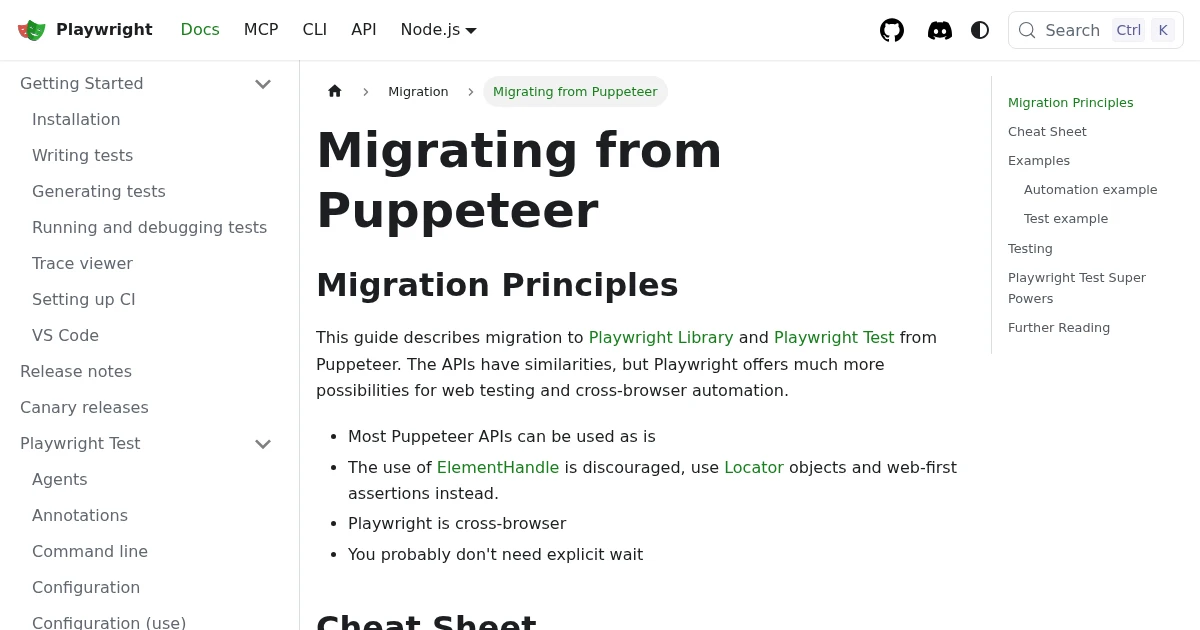
Puppeteer vs Playwright for Screenshots: Which Should You Use?
A practical comparison of Puppeteer and Playwright for taking screenshots: API ergonomics, full-page capture, cross-browser support, speed, and when a hosted API beats both.
Jun 15, 2026 · 6 min read
How to Take Screenshots in Playwright (Full Page, Elements, CI)
Everything you need to take screenshots in Playwright: the viewport default, full-page captures, element-level shots, and wiring it all into CI. Plus when to reach for an API instead.
Jun 14, 2026 · 10 min read
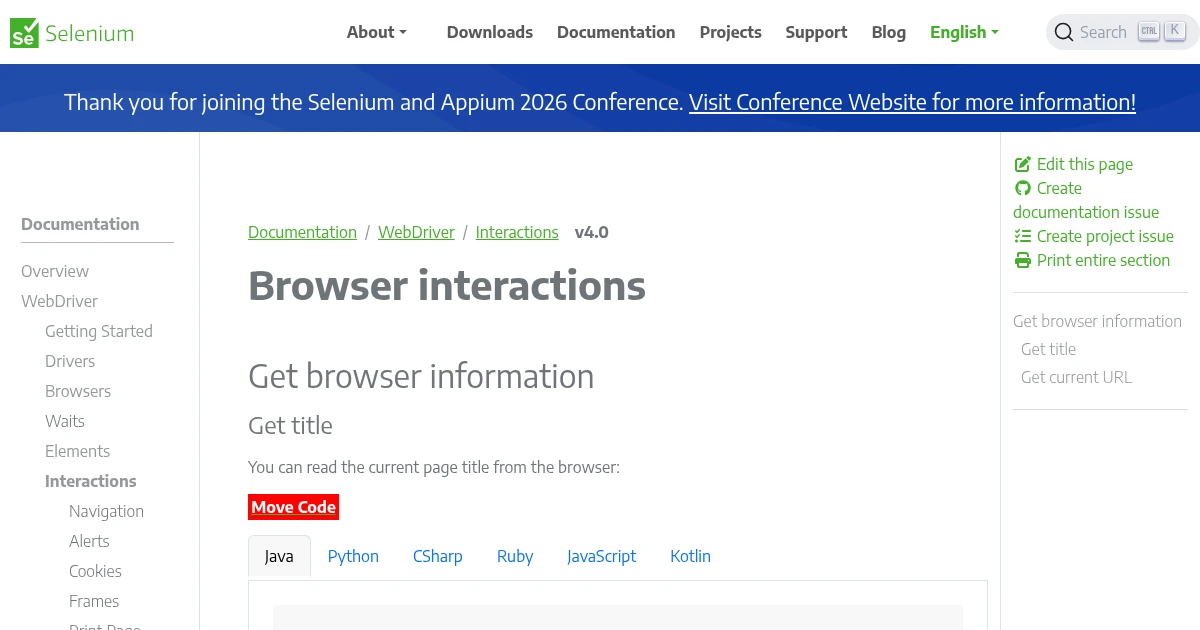
How to Take Screenshots in Selenium (Full Page and Element)
How to capture screenshots in Selenium WebDriver: the viewport default, the full-page workarounds Selenium does not handle natively, single elements, and when a screenshot API is less work.
Jun 16, 2026 · 5 min read